Losing several teeth or an entire arch of teeth changes daily life in ways that go beyond appearance. Eating, speaking, and even smiling with confidence can become difficult. For people searching for a lasting fix, all on four dental implants have become one of the most talked about options in modern dentistry. This treatment combines the stability of implants with the completeness of a full set of teeth, all placed using just four implant posts per arch.
This article explains what all-on-one dental implants are, how the procedure works, who benefits from it, and what to expect when exploring dental implants all on four as a tooth replacement option in Covington.
What Are All-on-4 Dental Implants
All-on-4 dental implants are a full arch tooth replacement method that uses four strategically placed implant posts to support an entire row of prosthetic teeth. Instead of placing a separate implant for every missing tooth, this approach relies on four implants angled and positioned to maximize contact with existing jawbone, even in cases where bone density has decreased over time.
The result is a fixed, non-removable set of teeth that functions much like natural teeth. Unlike traditional dentures implants that may still require adhesives or occasional adjustment, an all-on-4 dental implant is anchored directly into the jaw, offering a level of stability that removable options cannot match.
This method is often described using different terms, including all on four dental, 4 in one teeth implants, or simply all on 4 dentist treatment, but the underlying concept remains the same: four implants, one complete arch, and a permanent result.
How All-on-4 Dental Implants Work
The all-on-4 process is built around precision planning and a clear sequence of steps. While every case is unique, the general treatment path follows a predictable structure.
Initial Consultation and Imaging
Before any procedure begins, a thorough evaluation is necessary. This typically includes digital x-rays or 3D scans to assess jawbone structure, remaining teeth, and gum health. This step determines whether someone is a suitable candidate and helps map out exactly where the four implants should be placed for maximum support.
Implant Placement
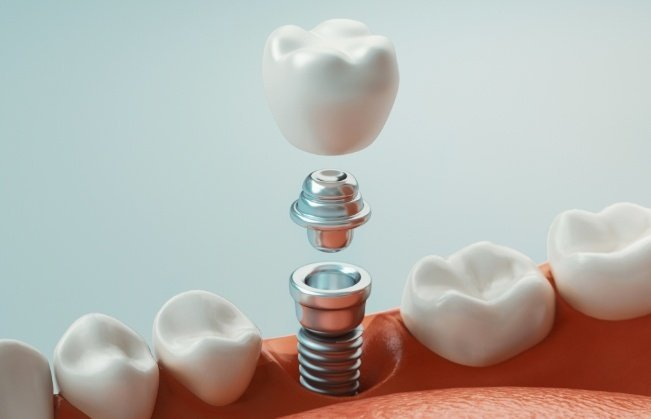
During the surgical phase, four titanium implants are inserted into the jawbone at specific angles. The back implants are usually angled to avoid areas with thinner bone, such as the sinus cavity in the upper jaw, while still providing strong anchorage. This angled placement is part of what makes the all-on-4 dental implants approach effective even for patients who have experienced bone loss.
Temporary Teeth and Healing
In many cases, a temporary set of teeth can be attached to the implants on the same day as surgery. This allows patients to leave with a functional smile while the implants fuse with the jawbone over the following months, a process known as osseointegration.
Permanent Restoration
Once healing is complete, the temporary prosthetic is replaced with a custom-made permanent set of teeth. This final restoration is designed to match natural tooth color, shape, and bite alignment, giving a result that looks and functions like a real set of teeth.
Benefits of All-on-4 Dental Implants
Choosing all-on-4 dental implants over other tooth replacement methods offers several practical advantages. Below is a comparison to help illustrate how this option compares with traditional dentures.
| Feature | Traditional Dentures | All-on-4 Dental Implants |
|---|---|---|
| Stability | Can shift or slip | Fixed and secure |
| Bone Preservation | Does not prevent bone loss | Helps preserve jawbone |
| Eating Comfort | Limited with hard foods | Close to natural chewing ability |
| Daily Maintenance | Requires removal and adhesives | Brushed like natural teeth |
| Speech Clarity | May affect pronunciation | Minimal impact on speech |
| Treatment Time | Multiple fittings over time | Often completed in fewer visits |
| Long-Term Cost | Ongoing replacements needed | Designed for long-term use |
This comparison highlights why many patients researching affordable permanent teeth options consider all-on-4 implants a worthwhile long-term investment rather than a recurring expense.
Who Is a Candidate for All-on-4 Dental Implants
Not everyone requires the same type of tooth replacement, and understanding candidacy is an important part of the decision-making process. People who are generally good candidates for all-on-4 dental implants include those who:
- Are missing most or all of their teeth in one or both arches
- Currently wear dentures but experience discomfort or instability
- Have some bone loss but not enough to rule out implant placement
- Want a fixed solution rather than a removable one
- Are in general good health and free of uncontrolled conditions that could affect healing
A consultation with a qualified all on 4 dentist is the only way to confirm candidacy, since factors such as bone density, gum health, and medical history all play a role in determining the right treatment plan.
Affordable Permanent Teeth Options in Covington
Cost is often one of the biggest concerns when researching tooth replacement options. While all-on-4 dental implants may require a larger upfront investment compared to dentures, the long-term value often makes them a more affordable permanent teeth solution over time. Traditional dentures typically need relining, adjustments, or full replacement every several years, while a well-maintained all-on-4 restoration is built to last much longer with proper care.
We understand that every patient has different needs and budget considerations. That is why treatment planning includes a clear explanation of costs, available options, and what to expect at each stage of the process. For more details on treatment options, patients can review information ondental implants to better understand what a personalized plan might involve.
Why Choose a Dental Implant Clinic in Covington
Selecting a local dental implant clinic offers several practical advantages, particularly for a procedure that involves multiple appointments over several months. Choosing a dentist covington wa residents can easily access means fewer travel concerns during follow-up visits, imaging appointments, and the eventual placement of the permanent restoration.
We focus on a patient centered approach that combines careful diagnostic planning with attentive, ongoing care throughout the treatment timeline. From the first consultation through final restoration, the goal is to provide dental implants covington wa patients can rely on for a smile that looks natural and functions reliably.
For anyone comparing options among dental implant clinic covington providers, factors worth considering include the technology used for imaging and planning, the experience of the surgical team, and the level of communication provided throughout treatment. A thorough consultation should always precede any decision, allowing patients to ask questions and fully understand their options before moving forward.
What to Expect After Treatment
Recovery after all-on-4 implant placement varies from person to person, but most patients can expect some swelling and mild discomfort in the days following surgery. Soft foods are typically recommended during the initial healing period, gradually transitioning to a normal diet as the implants integrate with the jawbone.
Long-term care for all-on-4 dental implants is relatively straightforward. Daily brushing, regular dental checkups, and avoiding excessive force on the prosthetic teeth all contribute to the longevity of the restoration. Because the teeth are fixed in place, there is no need for the adhesives or nightly removal associated with traditional dentures.
Conclusion
Choosing the right tooth replacement solution is a significant decision, and all-on-4 dental implants continue to stand out as a reliable option for people seeking a fixed, functional, and natural looking smile. From the initial consultation through the final restoration, understanding each step of the process helps patients make informed choices about their oral health. At Complete Dental Care of Covington, treatment planning is approached with attention to detail and a focus on long-term results. Patients considering this option are encouraged to schedule a consultation with Complete Dental Care of Covington to discuss individual needs and treatment goals. With experienced guidance from Complete Dental Care of Covington, achieving a stable and complete smile becomes a realistic and well supported goal. For those exploring tooth replacement options in the area, Complete Dental Care of Covington remains a resource for detailed, honest information throughout the treatment journey.
Frequently Asked Questions
How long does the all-on-4 dental implant procedure take?
The surgical placement of implants typically takes a few hours, and many patients receive a temporary set of teeth the same day. The full process, including healing and placement of the permanent restoration, generally spans several months.
Are all-on-4 dental implants painful?
Most patients report manageable discomfort similar to other oral surgery procedures. Pain is usually controlled with prescribed medication and subsides within a few days.
Can I get all-on-4 implants if I have bone loss?
In many cases, yes. The angled placement of the back implants in the all-on-4 technique is specifically designed to work with reduced bone volume, though a full evaluation is needed to confirm candidacy.
How do all-on-4 implants compare to traditional dentures in cost?
While the initial cost is often higher, all-on-4 implants tend to reduce long-term expenses since they do not require the frequent adjustments or replacements associated with traditional dentures.
How should I care for all-on-4 dental implants?
Care involves brushing and flossing as you would with natural teeth, along with regular checkups to monitor implant health and the condition of the prosthetic.
Is the all-on-4 procedure suitable for both upper and lower arches?
Yes, the technique can be used for the upper jaw, lower jaw, or both, depending on individual needs and treatment goals.